Oxidation-free joints:
As the process occurs in a vacuum, there is no oxidation of the metal surfaces. This results in clean, high-strength, and dense joints without the need for flux.

Vacuum brazing is a specialized method in metalworking that uses filler material to join components under vacuum conditions. This process is often employed to create highly precise, clean, and durable connections suitable for demanding applications. Unlike traditional brazing techniques, which are usually performed in atmospheric conditions or with shielding gas, vacuum brazing occurs in an oxygen-free environment. This results in exceptionally pure joints free from oxidation and contamination.
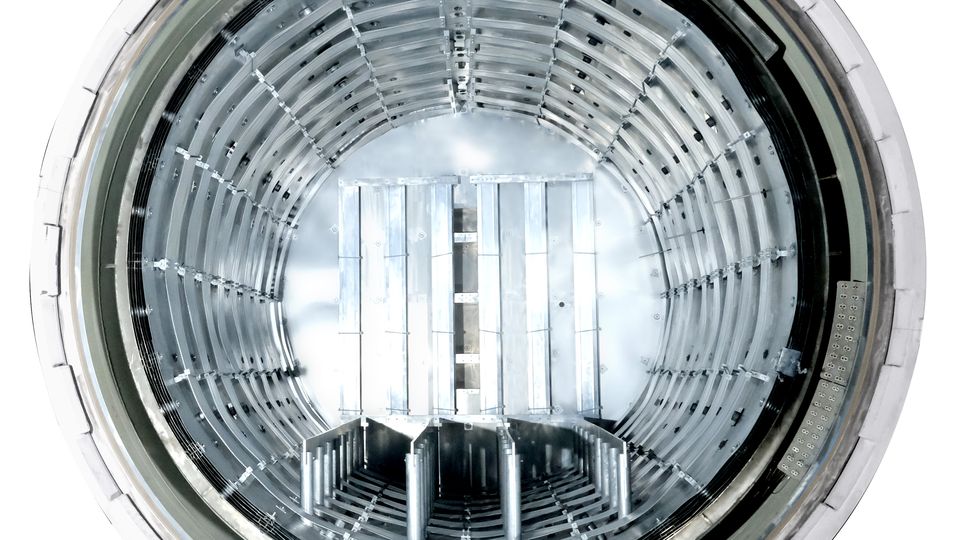
In vacuum brazing, metal components are heated in a hermetically sealed vacuum furnace until the filler material melts and flows into the joints of the parts. The process relies on capillary action to draw the filler material into the joint, where it solidifies to form a strong, dense bond. The entire process takes place under vacuum to protect the components from oxidation and other impurities.
The metal parts to be joined are thoroughly cleaned to remove contaminants, grease, and oxides. A clean surface is crucial to achieving an optimal bond. The components, along with the filler material, are then placed into the vacuum furnace.
After sealing the furnace, air is evacuated to create a high vacuum. This prevents oxygen from reacting with the components, which would otherwise lead to oxidation of the metal surfaces.
Once the desired vacuum level is achieved, the components are slowly heated to the melting temperature of the filler material (liquidus temperature). This typically ranges between 600°C and 1,200°C, depending on the filler material and the metals being joined.
As the filler material melts, it flows into the joints through capillary action. The vacuum ensures the filler spreads evenly and without impurities. Unlike conventional brazing, no flux is required in this process.
After brazing, the furnace temperature is gradually reduced, allowing the components to cool in the vacuum. Controlled cooling ensures the joints solidify uniformly (solidus temperature) and achieve the desired mechanical properties, such as strength and tightness.
Vacuum brazing with hard filler material: Hard brazing under vacuum is commonly used for materials like steel, nickel, copper, and their alloys. It involves melting the filler material at high temperatures (above 450°C) to create strong, heat-resistant bonds.
Vacuum brazing of ceramics and metals: This process is used to join ceramic materials with metals. The primary challenge is accommodating the different thermal expansion rates of the materials, which is precisely controlled in vacuum brazing.
Vacuum brazing of aluminum: Since aluminum is highly prone to oxidation, vacuum brazing is an excellent method to produce clean, oxidation-free joints. This technique is widely used in the aerospace industry to join aluminum components.
Vacuum brazing offers numerous advantages over conventional brazing techniques, making it ideal for applications requiring high-precision and high-quality joints:
Despite its numerous advantages, vacuum brazing also presents some challenges:
High costs: Operating vacuum furnaces and producing high-quality joints require significant investment in equipment and materials, making the process more expensive than conventional brazing techniques.
Technical expertise: The process demands specific technical know-how and precise control of process parameters, as even minor deviations can result in defective joints.
Limited component size: The size of the components is restricted by the dimensions of the vacuum chamber. Larger parts require bigger and more expensive equipment.
The vacuum brazing process is an indispensable method for creating high-quality, clean, and robust joints in modern industry. Thanks to its precise process control and oxygen-free environment, it offers numerous advantages in terms of joint quality and strength. Although it involves higher investment costs and requires technical expertise, its outstanding results make it the preferred choice for applications in aerospace, electronics, automotive, and medical industries.
Do you have any questions about vacuum technology? We look forward to your inquiry and will get back to you promptly.